


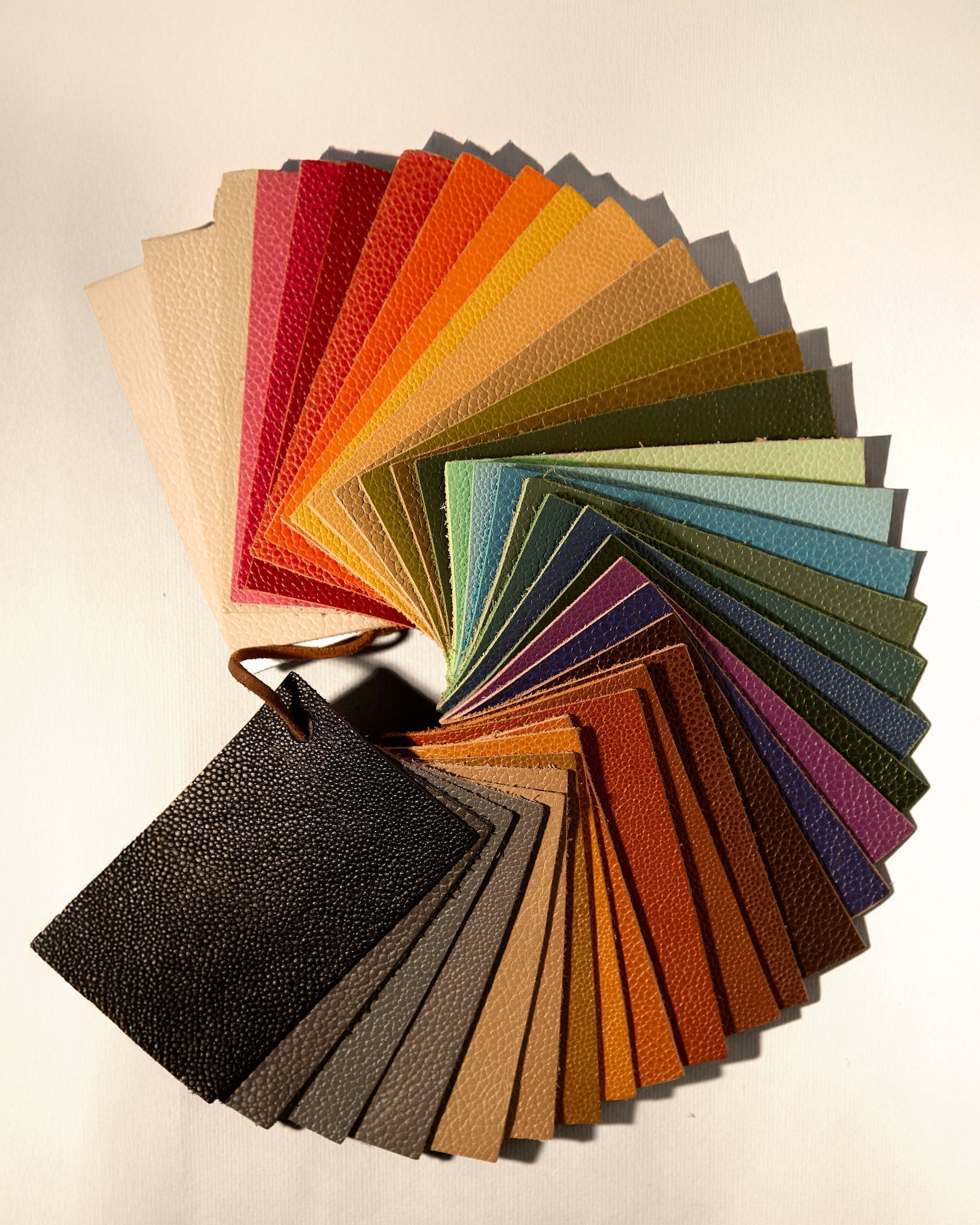
A leather bag can cost $200 or $20,000. The materials are described with the same words on both price tags. This post is a practical guide to telling them apart.
Start at the Edge
The single most reliable indicator of leather accessory quality is the finished edge.
Low-end leather accessories are not split or skived, generally have raw or thick seams and painted edges. The paint is a thick layer of sealant that covers the cut surface. It is shiny and obscures what is underneath. When the paint chips, it chips, rather than wearing and is hard to repair.
High-end leather goods have consistent uniform burnished edges. You should not be able to tell the difference where pieces come together, and the seams are noticeably thinner. A burnished edge is compressed with heat and friction until the layered fibers fuse into a single polished surface. It feels smooth, flexible and can be reburnished over and over without effecting the integrity of the item. A burnished edge gets better with age, and wears gracefully.
You can see the difference at a glance. Run a finger across the edge. If it feels plasticky, sticky it is painted.
Full-Grain vs. Corrected
Full-grain leather is made from the top layer of the hide, or the top grain layer. The natural grain surface left intact. It carries the original grain, scars, and subtle variations from the animal. The grain has not been sanded, buffed, or corrected to remove natural markings.
Corrected-grain leather has a grain surface that has been mechanically altered to remove imperfections. The top layer is typically sanded, buffed or is replaced with a printed imitation of grain. The artificial grain pattern is often embossed onto the surface afterward leaving it uniform, predictable.
Full-grain is harder to find because it requires higher-quality hides. A scarred hide cannot be made into corrected leather and sold as "luxury." A full-grain hide has to start perfect.
While there is no foolproof consumer test, careful observation of the leather's grain, texture, and natural variation—combined with information from the maker or retailer—can provide valuable insight into whether a leather is likely full-grain or corrected-grain.
Chrome-Tanned vs. Vegetable-Tanned
Chrome-tanned leather is processed using chromium salts — most commonly chromium sulfate — to stabilize and preserve the animal hide. It is known for its soft bend and drape, durable flexibility, and ability to handle moisture well. The variety of color and the through-and-through dye is visible, which is a hallmark of this advanced tanning method. It accepts embossing and finishing exceptionally well, though its patina development is typically less rich than vegetable-tanned leather.
Vegetable-tanned leather is leather that has been preserved and stabilized using natural tannins extracted from plant materials such as tree bark, leaves, roots, and fruits. This traditional tanning method has been used for thousands of years and is prized for its natural appearance, firmness, and ability to develop a rich patina. It is firmer, slightly stiff when new, and develops a deep warm patina over years of use.
What the Hardware Tells You
For luxury leather goods, hardware is often one of the clearest indicators of overall quality and the manufacturer's commitment to durability. Premium brands typically use solid brass, nickel-plated brass, or palladium-plated brass hardware because these materials have substantial weight, excellent strength, and develop an attractive appearance over time. High-quality hardware resists corrosion, maintains its finish longer, and contributes to the longevity of the product.
By contrast, zinc alloy hardware is commonly found in lower-cost goods. It is noticeably lighter, more prone to surface wear, and can develop pitting, flaking, or corrosion within a relatively short period of use.
When evaluating a handbag, briefcase, or leather accessory, pay particular attention to the interior hardware—such as zippers, pulls, D-rings, attachments, and clasps. These components are less visible to the consumer and are often where manufacturers reduce costs. While exterior fittings may appear impressive, the quality of the hidden hardware frequently reveals the true level of craftsmanship and investment in the product. Consistent use of premium hardware throughout the entire piece is a hallmark of well-made luxury leather goods.
Stitching
How has your item been constructed?
Saddle stitching, meticulously sewn by hand using two needles and a single thread, is celebrated for its exceptional strength, longevity, and ease of repair, while machine stitching—formed by interlocking two separate threads with a lockstitch machine—is valued for its precision, consistency, and production efficiency. Although a well-executed machine stitch can provide excellent durability, a traditional saddle stitch offers greater seam integrity, as it is less likely to unravel if an individual stitch becomes damaged.
(For the mechanics of why this matters, see our post on the saddle stitch.)
What a Premium Price Should Buy
At the $500-plus price point, you should expect: full-grain leather, vegetable-tanned or at minimum a quality chrome-tan, burnished edges, solid brass hardware, and either hand or high-quality machine stitching. Anything less and you are paying for branding.
At the $5,000-plus price point, you should expect all of the above plus hand saddle stitching, beautiful burnished edge finishing by hand, and leather sourced from known tanneries with named provenance. You should also expect the maker to stand by thier product.
Where to See the Difference
We educate a person about leather the same way a sommelier learns about wine—by handling a great deal of it, side by side, over time. Workshops at Heirloom are an entry point, but the real education happens through touch, observation, and repetition. You cut the leather, burnish the edges, and feel its weight, density, and drape in your hands. You begin to recognize the subtle differences between hides, finishes, and constructions that no photograph or product description can fully convey.
As your understanding grows, so does your ability to evaluate quality. You learn to distinguish full-grain from corrected leather, saddle stitching from machine stitching, solid brass hardware from plated alloys, and thoughtful craftsmanship from shortcuts hidden beneath a polished exterior. What once appeared similar begins to reveal layers of difference.
After that, every bag, wallet, belt, or leather accessory you encounter tells a different story. You notice the choices the maker made, the materials they selected, and the compromises they accepted—or refused to make. Leather ceases to be merely a product and becomes a language you can read, one that speaks of quality, craftsmanship, and the passage of time.


