


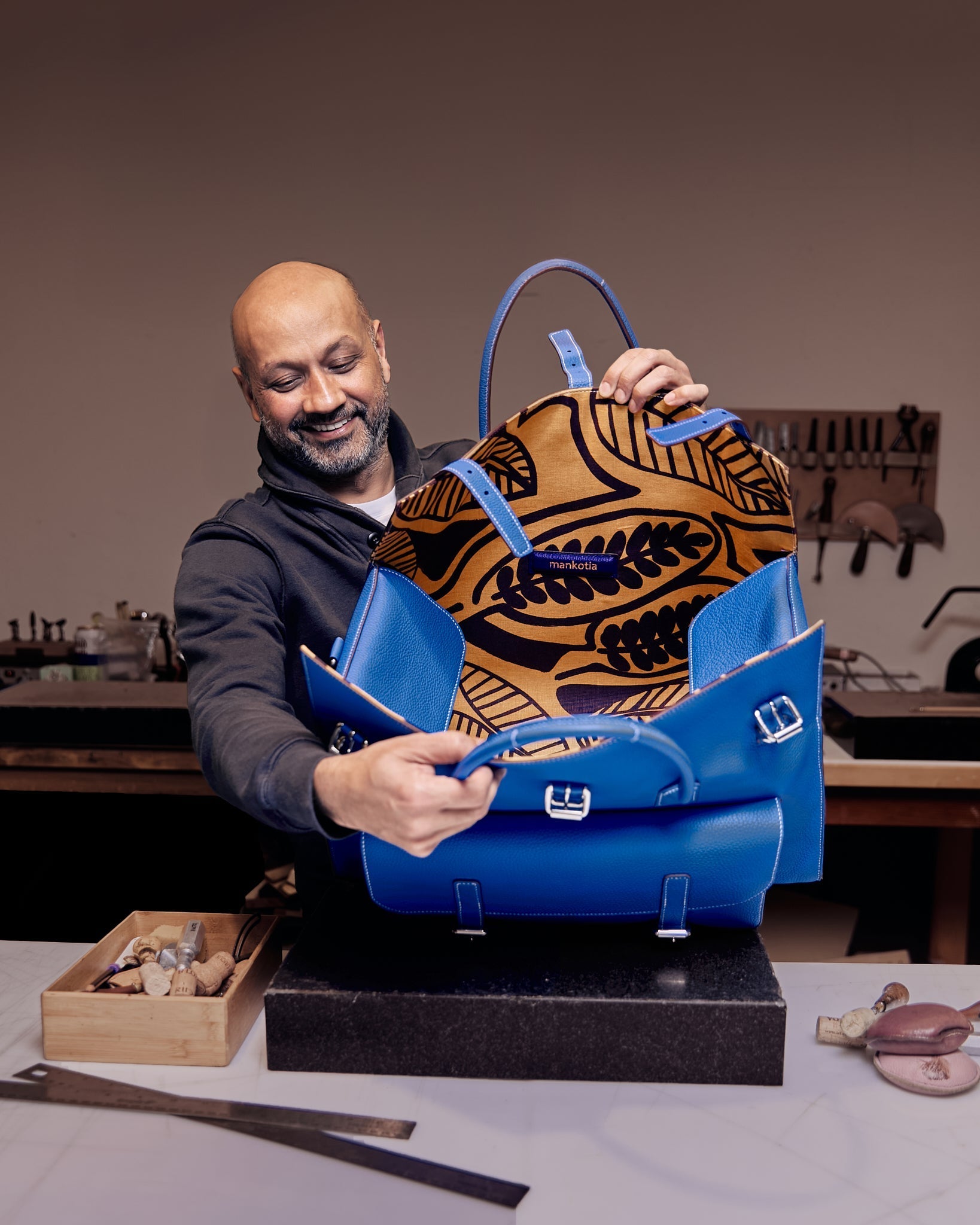
An heirloom is not bought. It is made, used, and handed on.
An heirloom is an object made well enough to outlive its maker and meaningful enough to be handed down. Three things make something an heirloom: durable construction, materials that age gracefully, and a story of use that gives it worth beyond its price. Fine leather, hand stitched with the saddle stitch, meets all three. At Heirloom Leathercraft in San Francisco, students learn to make exactly these kinds of objects.
What actually makes something an heirloom?
An heirloom is not defined by cost. It is defined by two things happening together. The object has to be built to last, and it has to be worth keeping. A cheap thing that survives is clutter. A precious thing that falls apart is a disappointment. An heirloom is where durability and meaning meet.
The word points backward and forward at once. Something becomes an heirloom because someone made it carefully and someone else decided it was worth passing on. It carries the hands that made it and the lives that used it.
Why does leather make good heirlooms?
Leather is one of the few materials that improves with age. Where plastic cracks and fast fashion frays, well-tanned leather softens, darkens, and records the life of its owner in a patina no factory can fake. It wants to be used, and use makes it better.
That is why leather has been carried across generations for centuries. A satchel, a wallet, a case. Repaired when needed, but rarely replaced. The material is built for the long arc of a family's use.
Does how it is made matter?
It matters more than anything. An heirloom has to survive decades of use, and construction decides whether it can. The hand saddle stitch, taught at Heirloom the way it is done at the highest level of French leatherwork, locks each stitch so the seam holds even if one thread fails.
That is the difference between an object designed to be replaced and one designed to be repaired and kept. Machine seams unravel from a single break. A hand-stitched seam endures, and what endures can be handed down.
Can you make an heirloom yourself?
You can, and that may be the truest way to create one. An heirloom bought is an heirloom in waiting. An heirloom made carries something more, the time and attention of the person who built it, often the very person it will be handed down from.
This is what students at Heirloom learn to do. Béatrice Amblard, who trained in Paris and spent years at Hermès, teaches the methods behind objects made to last. Anne, a graduate, said the program "truly honors the discipline, precision, and tradition of fine leatherworking." That discipline is what makes an heirloom possible.
Where do you begin if you want to make things that last?
You begin with the stitch. The Core Program runs through four levels, from your first even line of stitching to fully constructed pieces built to endure. Enrollment is open and rolling, so you can start whenever you decide the work is worth your time.
An heirloom is not something you find. It is something you build, or learn to build. The making is where the meaning begins.
Frequently Asked Questions
What makes an object an heirloom?
Durable construction, materials that age well, and a story of use worth passing on. An heirloom is where lasting quality and personal meaning meet.
Why is leather good for heirlooms?
Well-tanned leather improves with age, softening and developing a patina. Hand-stitched with the saddle stitch, a leather piece can be repaired and carried across generations.
Can I learn to make heirloom-quality leather goods?
Yes. Heirloom Leathercraft's Core Program teaches four levels of skill behind lasting pieces, starting with the hand saddle stitch.
Where is Heirloom Leathercraft located?
At 15 Clement Street in San Francisco, where Béatrice Amblard and Amélie Amblard teach the core program.


