


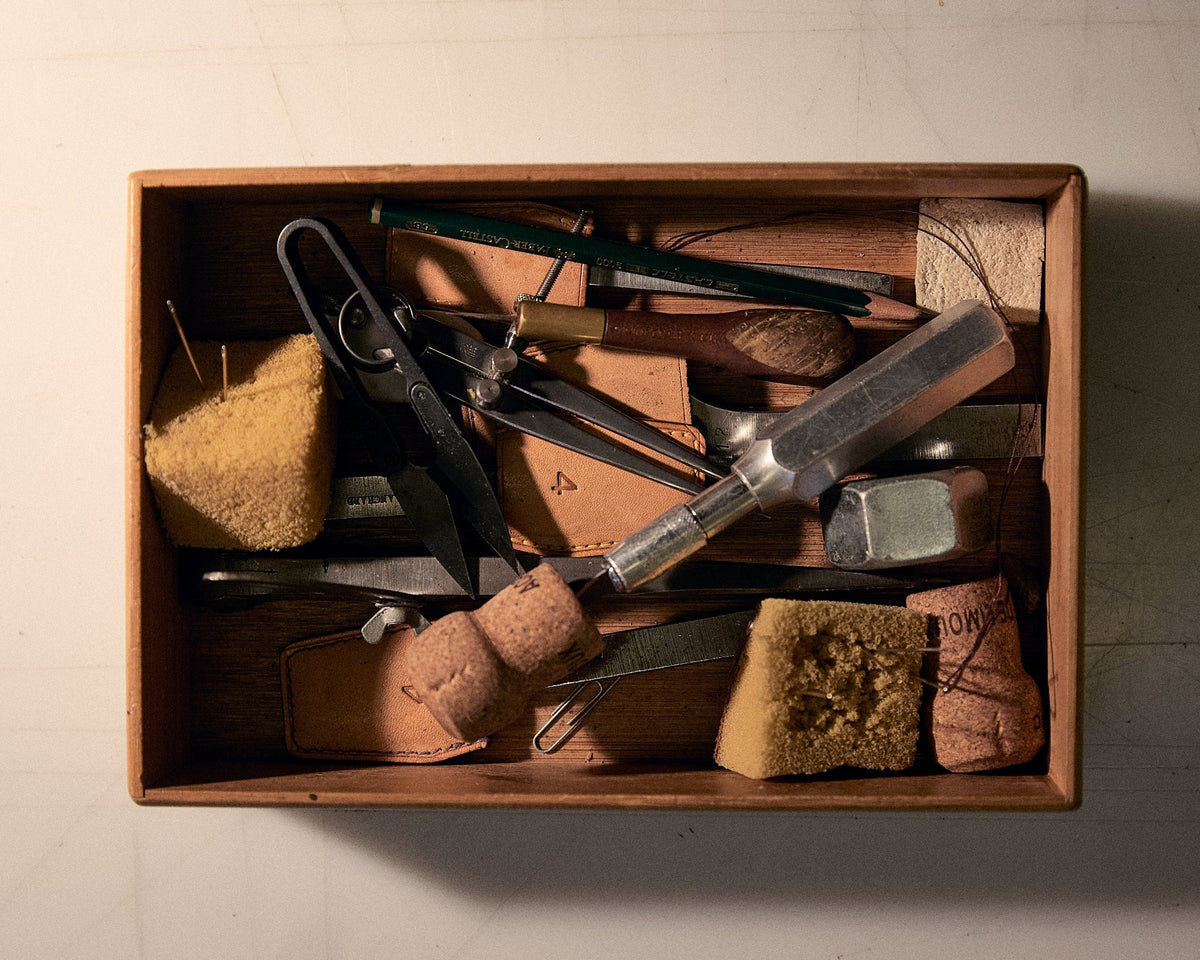
The short list that actually matters when you begin.
A beginner's leather toolkit is smaller than most people expect. To start hand stitching you need a cutting tool and mat, a stitching awl or pricking irons, mallet, two harness needles, linen thread, wax, stitching clamp and a good piece of leather. At Heirloom Leathercraft, students learn the saddle stitch first, so the earliest tools all serve that one method. Buy fewer, better tools and learn to use them well.
What tools do you actually need to start?
The temptation when you begin is to buy everything. Resist it. The saddle stitch, which is where fine leatherwork starts, asks for a short and specific list. You need a way to cut cleanly, a way to mark and open evenly spaced stitching holes, two needles, linen thread, and a way to finish an edge.
That is close to the whole kit for your first projects. Everything else is refinement you add once you know what your hands actually reach for. A small kit used correctly will teach you more than a drawer of tools you have not learned.
Why does the cutting tool matter so much?
Most beginner mistakes happen before the first stitch, at the cut. A clean, straight edge is the foundation of a clean piece, and a dull or wandering blade shows in everything that follows. A sharp knife used with a steel straightedge, will do more for your results than any expensive gadget.
A blade that is sharp is a tool you can trust, and trust is what lets you cut with confidence.
What makes the stitch clean?
Even stitching comes from even marks. Pricking irons or a stitching chisel mark a consistent spacing and angle, and that consistency is what gives hand-stitched leather its recognizable, orderly look. Two harness needles and linen thread complete the saddle stitch, where each pass locks against the last.
This is the technique taught first at Heirloom, the way it is done at the highest level of French leatherwork. The tools are simple. The skill lives in the hands, which is exactly why instruction matters more than equipment.
What about finishing the edges?
Edges are where a piece announces whether it was made with care. A heated burnishing iron seals edge and pushes out any excess glue and seals it. Done well, a finished edge feels solid and looks intentional- beautiful and clean. Done poorly, it frays and gives the whole piece away.
Where should you buy your first tools?
Buy from people who understand the craft, not just the catalog. Heirloom stocks tools and supplies chosen for the method it teaches, so what you buy matches what you learn. Starting with the right leather matters too. A good full grain hide behaves predictably and rewards a beginner's practice.
The one-day Introduction to the AMBLARD Method ($800) starts you on proper tools under guidance, which is the surest way to learn what belongs in your own kit.
Frequently Asked Questions
What is the single most important beginner tool?
A sharp cutting blade. Clean cuts are the foundation of every clean piece, and most early mistakes trace back to the cut rather than the stitch.
Do I need a sewing machine to make leather goods?
No. Fine leatherwork is hand stitched. Heirloom teaches the saddle stitch, which uses two needles and waxed thread and is stronger than a machine seam.
How much should I spend on my first kit?
Spend on a few quality tools rather than many cheap ones. A sharp knife, pricking irons, needles, linen thread, and an stitching clamp will carry you through your first projects.
Where can I buy tools that match the method?
Heirloom's Tools and Supplies collection stocks equipment chosen for the hand saddle stitch it teaches, so your tools match your training.


